AI · · 8 min read
Your voice agent must now say it is an AI. Design what happens next.
Since 2 August, voice agents answering EU callers must say they are AI, and December's grace period does not cover it. Writing the sentence is easy. How callers react to it is the cost, and the part to design.
By Precision Code Studios, Engineering team
"Thanks for calling. I'm Ava, how can I help?" For the past two years that was an ordinary way for a voice agent to answer the phone. If your agent takes calls from people in the European Union, it is now probably not good enough. Since 2 August 2026, Article 50 of the EU AI Act has required AI systems that talk directly to people to make clear that they are AI, and the European Commission's guidelines, adopted on 20 July, are specific about telephony: an explicit spoken statement at the start of the call, with periodic reminders in longer calls, particularly after an interruption or when the AI's role changes. A generic reference to an "assistant" is listed as not enough.
If you run customer operations, or own a roadmap with a voice agent on it, you have probably heard two reassurances this year. The first is that the AI Act was delayed. Part of it was: the Digital Omnibus pushed the high-risk rules back to December 2027 and August 2028, but it left the transparency duties on their original date. The second is that systems already live before August have until 2 December. That grace period covers the machine-readable marking of generated content, a separate duty in Article 50(2). It does not cover telling a caller they are talking to a machine.
Under the Act, breaching the transparency duties can cost up to 15 million euros or 3% of worldwide annual turnover. A number like that gets the sentence written within a week. The harder work is in the call around it: when the reminder plays, where "person" leads, and what your containment figures look like once every caller has heard the word AI.
The sentence is easy. What callers do next is the cost
Some callers will ask for a person the moment they hear the word AI. How many depends on who your callers are and why they ring, and nobody can give you that number in advance, including us. What can be said with confidence is this: if your business case rests on a pilot where the agent never announced itself clearly, the containment figure in it (the share of calls the agent finishes without a human) was measured under conditions that no longer exist. Run the pilot again with the final greeting before you trust the forecast, the staffing plan or the savings line that came from it.
There is an upside that rarely makes it into the business case. A caller who hears the disclosure and stays has chosen to, and arrives with the right expectations about what is on the other end. We would rather lose a caller at the greeting than have one realise halfway through, after explaining something personal, and spend the rest of the call feeling misled. If the rerun pilot shows more early opt-outs than the old one, some of that is the price of the second kind of call no longer happening.
Write the first ten seconds like a contract
A good greeting does four jobs, in a fixed order. Aim for under ten seconds. The reason is mechanical: the longer the greeting runs, the more time a caller has to start speaking, and on a platform with barge-in switched on, speaking cuts the agent off.
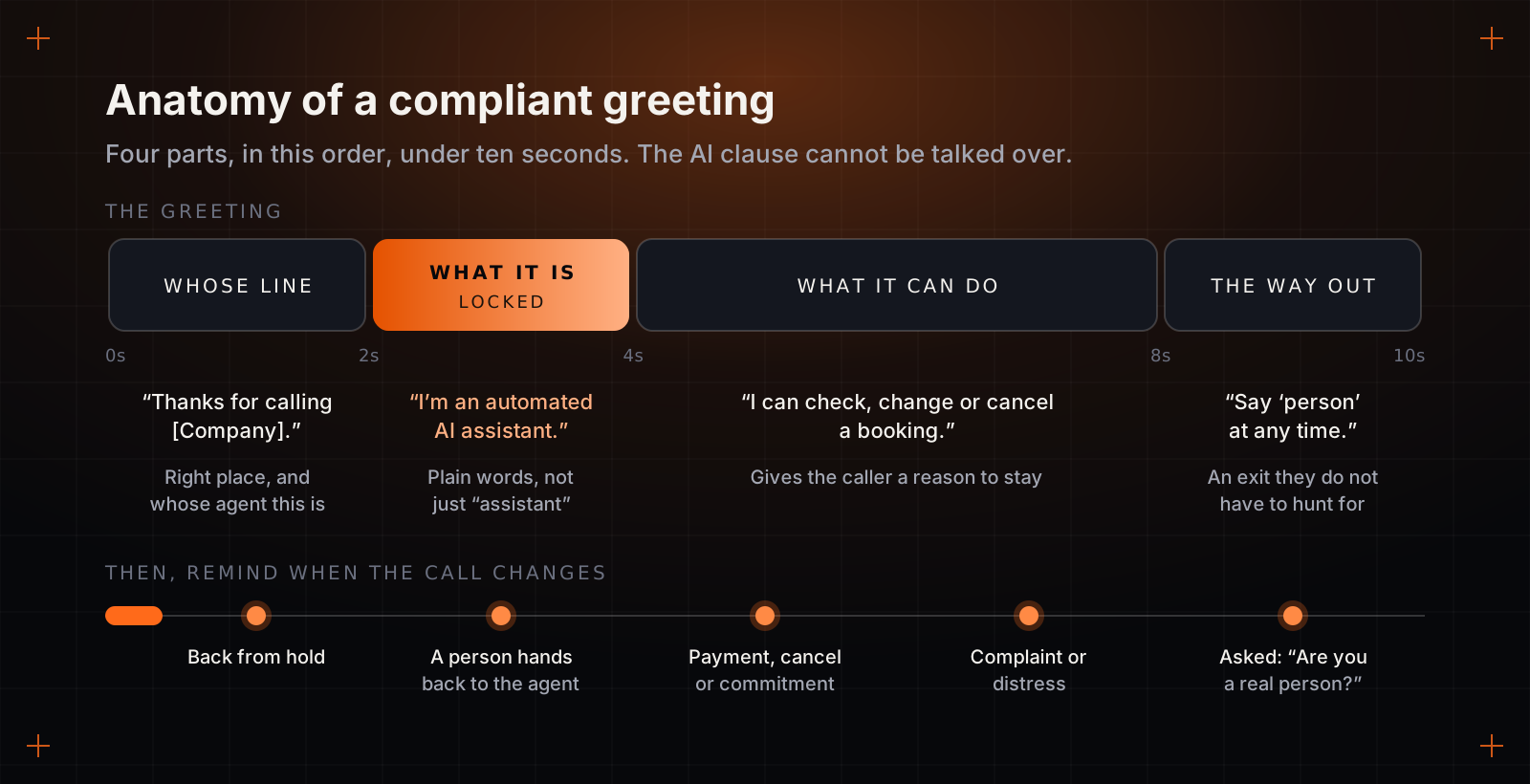
- Whose line this is. Company name first. The caller needs to know they reached the right place, and an agent acting for a business should say which business.
- What it is. Plain words: "an automated AI assistant". A name can stay if your brand wants one, but never on its own, because a human name is doing the opposite of disclosure.
- What it can do. One clause naming two or three real jobs, such as checking, changing or cancelling a booking. This is the part that keeps people on the line: a caller who hears their problem in the list has a reason to try.
- The way out. "Say 'person' at any time." Callers who know where the exit is have less reason to hunt for it by shouting "agent" over every question.
Barge-in, the feature that lets a caller interrupt the agent mid-sentence, is useful almost everywhere and wrong for exactly one clause. If a caller talks over the greeting, the disclosure may never be heard, and your logs will still say it played. Lock that clause against interruption, or have the agent repeat it at the first natural pause. Then add a test call that deliberately talks over the greeting to the checklist you run before every release, because scripted test calls tend to wait politely and never trigger it.
Once is not enough
The Commission's guidelines name two moments for a reminder in longer calls: an interruption, and a change in the role the AI is playing. Those are the first two triggers below. The other three are our own advice, not the Commission's. Whichever you adopt, write them into the agent as explicit rules rather than hoping the model remembers.
- An interruption. A dropped connection, a failed transfer, a long pause while the agent looks something up. Restate what the caller is talking to when the conversation resumes.
- A change of role. Moving from answering questions to taking a payment, cancelling a contract or agreeing something on the caller's behalf deserves a fresh statement of what is doing the agreeing.
- Back from hold, or handed back. After hold music a caller may assume a person has picked up. When a human passes the call back to the AI, say so, and when a person takes over, the caller should know a person is now on the line.
- The call turns sensitive. A complaint, distress, a caller who sounds vulnerable, anything about health. We would repeat the disclosure here even though the guidance does not single these out, because these are the calls where finding out late does the most harm.
- The caller asks. "Am I talking to a real person?" should get a straight answer every time, however it is phrased.
The way out has to lead somewhere
Offering a person is only honest if a person, or a credible promise of one, is on the other side. A caller who says "person" at nine in the evening and lands in a closed queue has been given an exit painted on a wall. Out of hours, the agent should take the details and book a callback with a time, and someone has to own keeping it.
Whatever route the caller takes, the transcript and what the agent already tried should travel with the call, so the human can open with "I can see you were trying to move your Thursday booking" instead of asking for the reference number again. Plan the rota for a new arrival pattern too: a share of callers will now reach the human queue in the first ten seconds, before the agent has done anything at all.
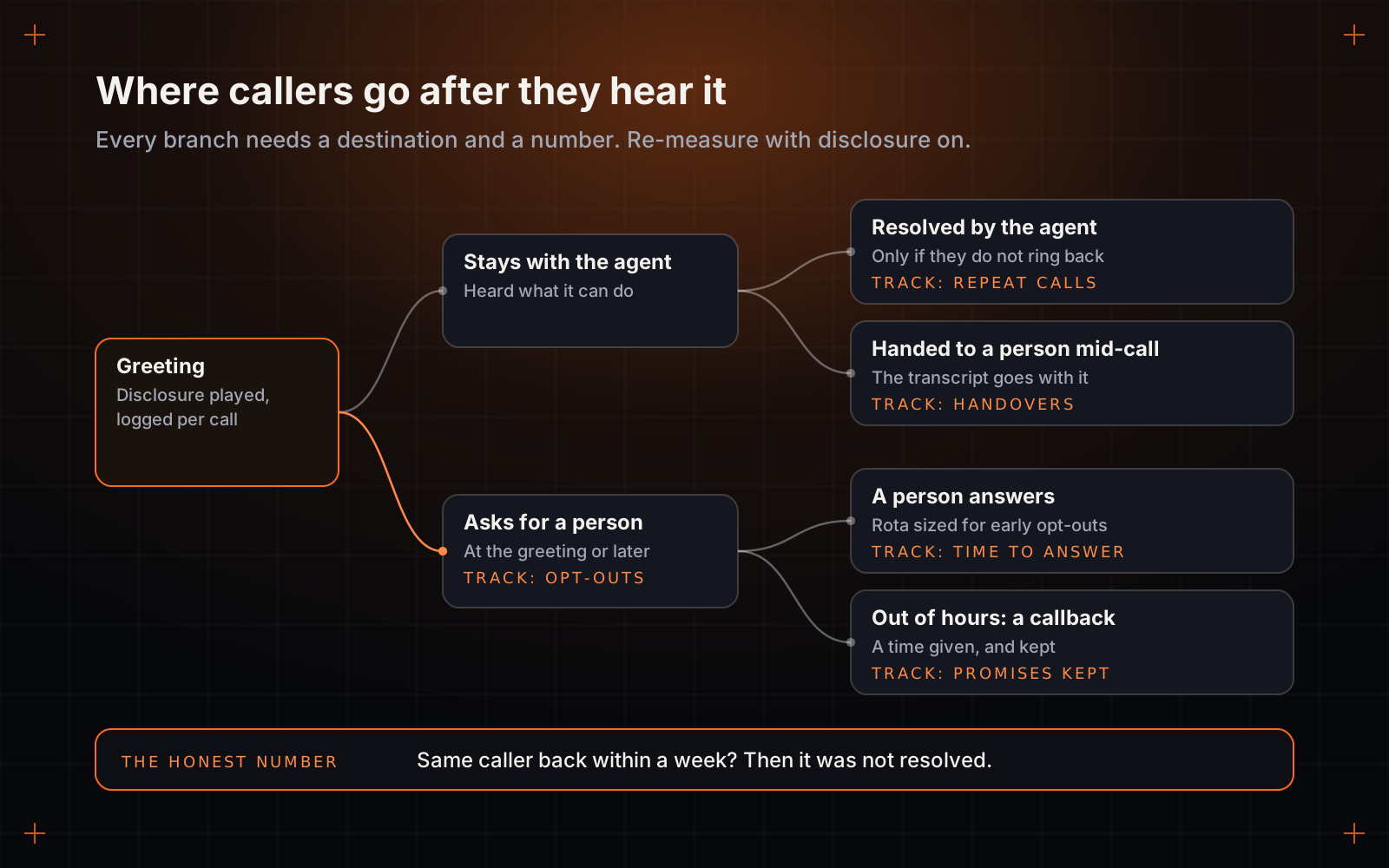
Measure each branch separately. A single containment percentage cannot tell you whether callers left at the greeting or gave up halfway, and those two problems have different fixes: the first is the greeting, the second is the agent. For the resolved branch, match calls by phone number or account, and if the same caller rings back within a week about the same problem, count the first call as unresolved and report that figure next to containment.
When a voice agent is the wrong buy
Look at why people call you before you look at any demo. Agents earn their keep on calls that are frequent, well defined and low in emotion: order status, appointment changes, delivery windows, payment dates. If your call reasons are mostly complaints, disputes, bereavement or negotiation, many callers will opt out at the greeting, the rest will need reminders, and the agent becomes an expensive way to route calls to people.
In that case the better investment is routing, call-reason tagging and your human team. If you do not know which kind of call centre you run, tag every call by reason for a month before you sign anything, then compare the share of routine calls with the share of difficult ones.
Questions for whoever builds or sells your agent
These work for any vendor, any platform and an in-house team alike. Ask to see each one working, not to hear that it is supported.
- Where does the disclosure live? It should sit in versioned configuration you control, not inside a prompt someone can edit on a Friday afternoon.
- What happens if I talk over it? Call the agent and interrupt the greeting. Listen to what you actually heard.
- What triggers a reminder? Interruptions, changes of role, and whichever of the other triggers you adopt. Ask for the rules as written.
- Can you prove it per call? A log showing which greeting version played, in which language, and whether it finished. When a regulator or an angry customer asks about one call, that record is the answer.
- Is it right in every language you serve? Have a native speaker listen. A disclosure that sounds machine-translated tells callers more than you intended.
- Where does "person" go after hours? If the answer is a voicemail box nobody checks, fix that before launch.
None of this is legal advice. Whether your company counts as the provider or the deployer of the system is a question for counsel, and it helps to bring them the greeting configuration and a handful of recordings, not only the vendor contract.
Before any of that, make three calls to your own number. Talk over the greeting. Ask, halfway through, whether you are speaking to a person. Then ring at nine in the evening and say "person". Write down what you heard each time, and take those notes into the next conversation with whoever runs the agent.
The short film: transcript
Your phone agent must now say it is an AI: the short version (1:32)
If your voice agent answers calls from people in Europe, its opening line is now a compliance matter, and a greeting written before this summer may not pass.
The guidance is specific about the phone, and it rules out the easy options. A line in the terms and conditions doesn't count, nor does a vague word like assistant, and a friendly human name on its own sits badly with both.
If your agent was already live and you're counting on the second of December, you're out of compliance on disclosure today. Fines for that can reach fifteen million euros, or three percent of worldwide turnover.
The legal part is one sentence. The expensive part is how people react to it, so if your business case came from a pilot where the agent never announced itself, run that pilot again.
Lead with the company's name, then say plainly that it's automated. Naming a couple of jobs it can really do gives people a reason to stay, and offering the human route up front means nobody has to fight for it.
Every branch needs somewhere real to go, and a closed queue at nine at night isn't one. A single overall percentage can't show whether people left at the greeting or gave up halfway, and those need different fixes.
The debate about whether callers could tell is over, because the agent now tells them first. What decides the business case is everything it does after that.
Read the full article at Precision Code Studios.