Built with AI · · 6 min read
We pushed AI as far as it would go. It shipped a real-time strategy game.
An Unreal Engine 5.8 strategy game, a cloud backend, an AI commander that talks back, and a trailer edited by code. What was built, how, and what it proves about engineering with AI.
By Precision Code Studios, Engineering team
Games are among the hardest software there is to build. A real-time strategy game has to simulate hundreds of units, render a battlefield at speed, stay perfectly in step across machines, and remain fun. It is the kind of project that normally takes a studio. So it made the ideal test of a question we care about at Precision Code Studios: how far can one experienced engineer go when AI does the building and the engineer does the directing?
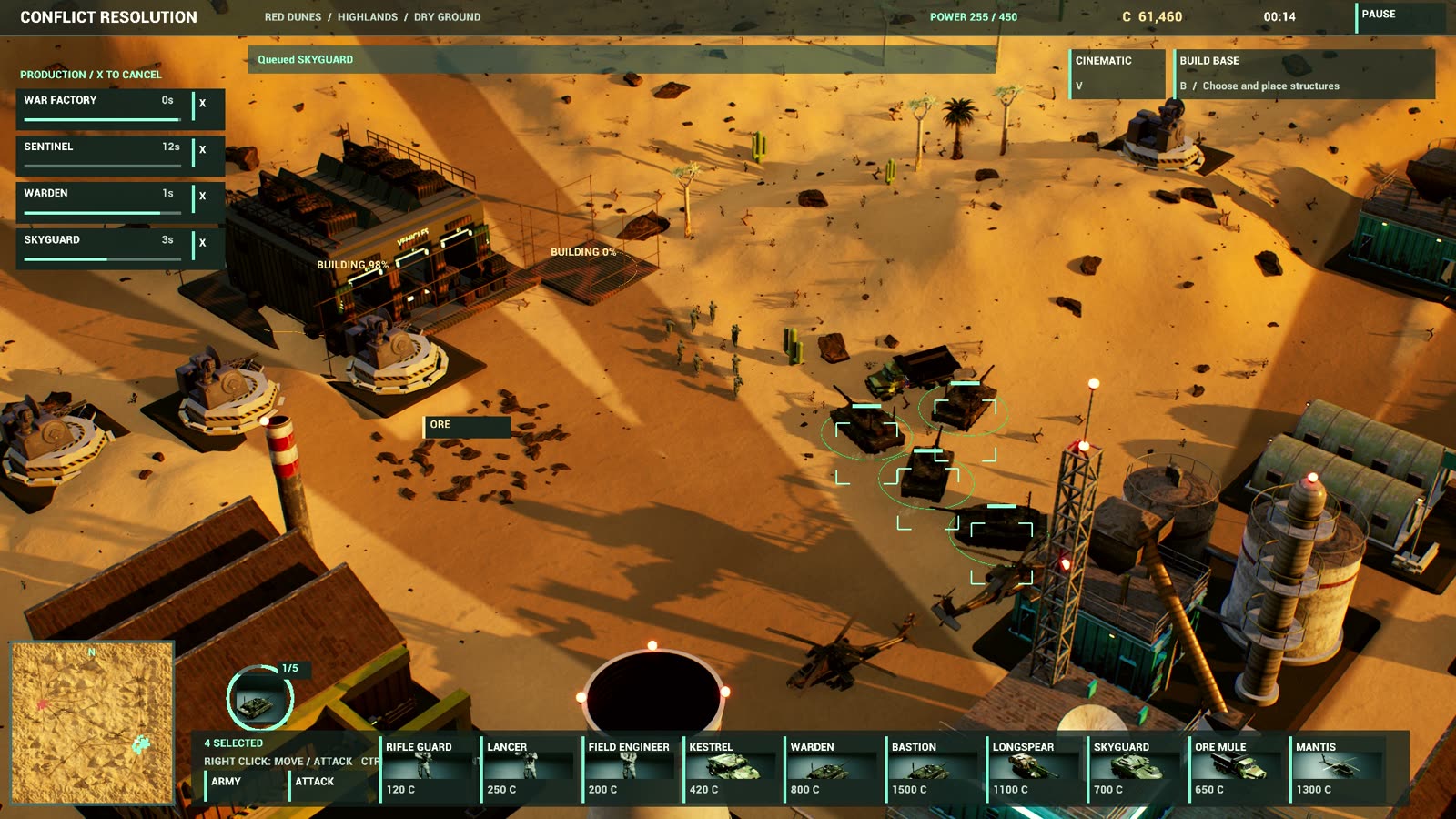
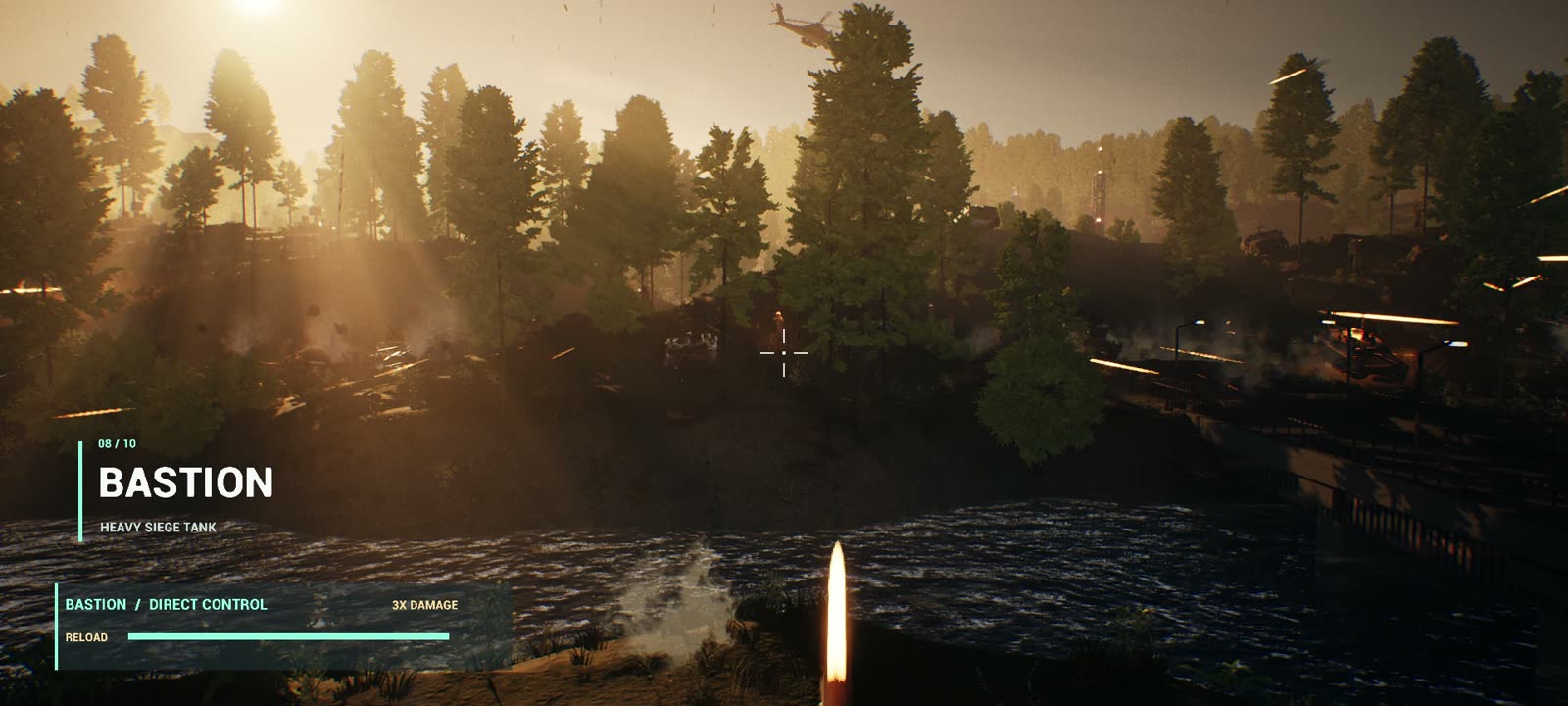
The answer is Conflict Resolution, and the trailer above. Armoured assaults, air strikes, large-scale base warfare and the Atlas strike: none of it is pre-rendered. Every shot comes straight out of the running game.
- 46,000+ Lines of C++ gameplay code
- 3 Large language models: Astra, Opus and Fable
- 3 Machines building in parallel
- 5 Battlefields with dynamic time of day
What was built
This is not a prototype with a nice screenshot. It is a full product in two halves, a game client and the online services behind it.
- The game Unreal Engine 5.8 with gameplay written in C++. Lumen global illumination, Nanite geometry, virtual shadow maps and volumetric weather, across five distinct battlefields.
- Multiplayer foundations A deterministic lockstep simulation, the model serious strategy games rely on to keep every player's battle identical.
- The backend An ASP.NET Core 9 Web API on clean architecture principles, with Entity Framework Core on Azure SQL, secure authentication, and SignalR for real-time lobbies and matches.
- The live services Matchmaking, career progression and leaderboards, hosted on Azure.


An opponent that thinks, and talks
The feature that surprises people most is the Enhanced Commander: an AI opponent powered by Anthropic's Claude Opus 5. It does not cheat. It works only from what a human player could see, and it commands its forces through the same systems the player uses. Then it talks to you about it, by voice, in real time.
The next step is to run the commander on locally hosted language models, so the opponent can play entirely on the player's own hardware.
How AI built it
The game was developed with three large language models. It was rough at the start. AI will happily produce a great deal of code that does not hold together, and a game engine is unforgiving of that.
What changed things was treating every lesson as an asset. Whenever something worked, it was captured in a Markdown guide kept in the repository: architecture rules, graphics pipelines, quality standards, workflows. With every guide added, the work became noticeably easier, because each new session started from everything learned before. The AI did not get smarter. The project did.
Three machines, one codebase
The second decision was structural. The codebase is strictly isolated by concern: small, single-purpose systems with clear boundaries, enforced by automated architecture checks. That is good engineering in any decade. With AI it becomes a multiplier, because work that cannot collide can run at the same time.
“It wasn't a fixed split. Each machine took on whatever part of the game needed work at the time, like graphics, gameplay, story or the backend. Because each system is kept separate, the machines could work on different parts at once.” The engineer behind the project
Even the trailer was engineered
Nobody sat in an editing suite. The same structure that let three machines build the game made it possible to produce the trailer programmatically: staged cinematic sequences, scripted gameplay capture, audio mixing and the final edit, assembled by code from a cut list. Change a scene, run the pipeline, and a new trailer comes out.
What this means for the software you need built
We did not build a game to enter the games business. We built it because it is a harder test than almost anything a business will ask for, and passing it tells you something about the method.
- Capture what works. Standards, pipelines and decisions live in the repository, so quality compounds instead of resetting.
- Isolate by concern. Clear boundaries and automated checks keep a fast-moving codebase coherent.
- Run in parallel. When systems cannot collide, progress stops being limited by one person's hours.
- Keep an engineer in charge. AI did the building. Experience decided what to build, and what good looks like.
That is what we mean by AI-native delivery, and it is how our teams approach client work: senior engineers directing AI with discipline, on products far less exotic than a strategy game, and at a pace that would have sounded unreasonable two years ago.
More to come.